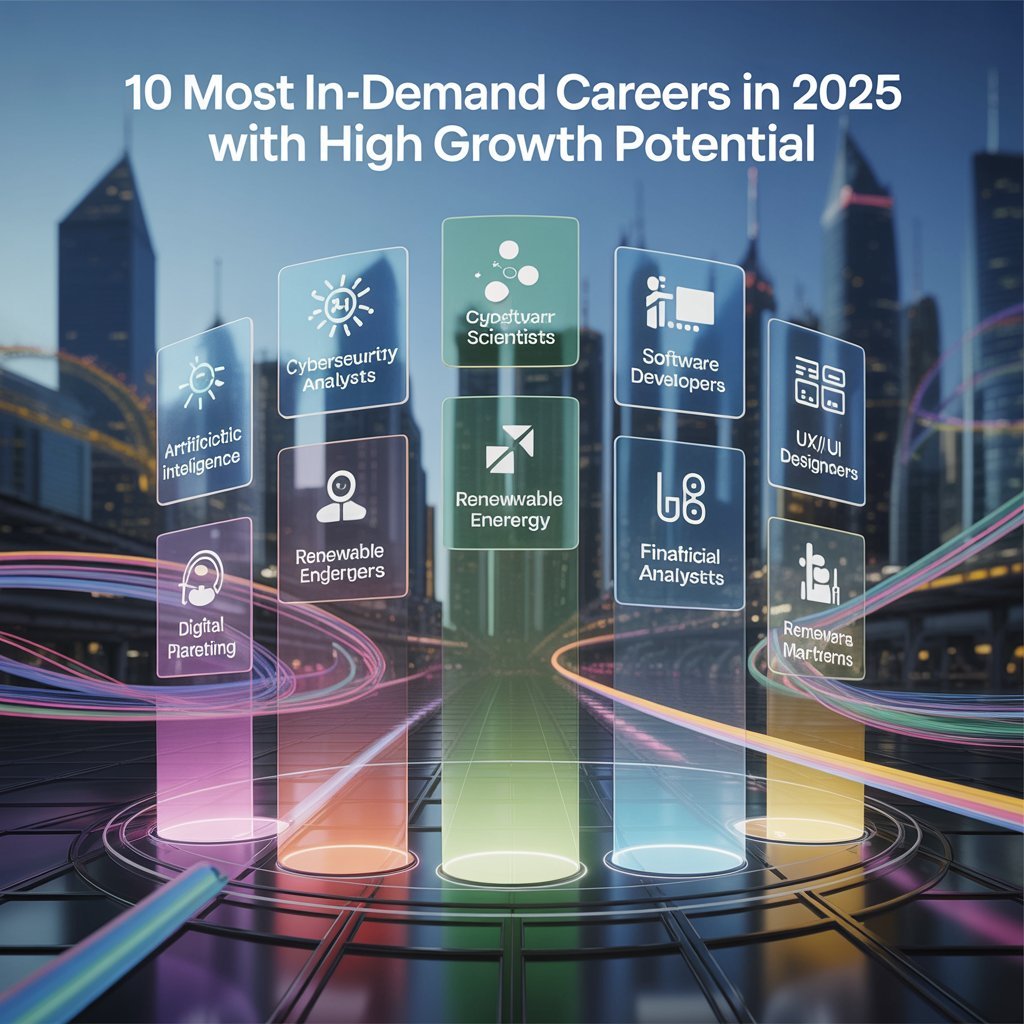
10 Most In-Demand Careers in 2025 with High Growth Potential
The job market is evolving faster than ever before. With artificial intelligence reshaping entire industries, remote work becoming the norm, and global challenges demanding innovative solutions, the careers that were hot five years ago might not even exist in their current form today. So how do you future-proof your career in 2025?
Here’s the thing: adaptability isn’t just a nice-to-have skill anymore—it’s your ticket to long-term success. The most in-demand careers in 2025 are those that blend human creativity with cutting-edge technology, solve real-world problems, and offer flexibility in how and where you work. Whether you’re a fresh graduate, considering a career switch, or simply curious about where the opportunities lie, understanding these high-growth careers will help you make smarter decisions about your future.
Let’s dive into the 10 most in-demand careers in 2025 that are not just surviving but thriving in this new era of work.

1. Artificial Intelligence & Machine Learning Specialists
If there’s one field that’s absolutely exploding right now, it’s AI. From chatbots that understand context to algorithms that predict market trends, artificial intelligence is the backbone of innovation across every sector imaginable. Companies are racing to integrate AI into their operations, and they need skilled professionals who can build, train, and optimize these systems.
Machine learning specialists work on everything from recommendation engines (think Netflix suggesting your next binge-watch) to self-driving car technology. The beauty of this career? It’s not confined to tech companies. Healthcare organizations use AI for diagnostic imaging, financial institutions deploy it for fraud detection, and even agriculture leverages machine learning for crop optimization.
What makes this one of the most in-demand careers in 2025?
AI won't replace people, but people who use AI will replace those who don't-Tech Futurist
What They Do
AI and ML Specialists work with large data sets to design, train, and test intelligent systems. They build models that can identify patterns, make decisions, and improve themselves through experience. In
real-world terms, their work powers chatbots, predictive analytics tools, virtual assistants, and even medical diagnosis systems.
They often collaborate with data engineers, software developers, and business leaders to turn data into insights and innovation. Their goal is not just to automate tasks, but to help organizations make faster, smarter, and more accurate decisions.
Top Skills
- Programming (Python, R, Java)
- Data analysis and statistical modeling
- Deep learning and neural networks
- Natural language processing (NLP) and computer vision
- Cloud computing and big data tools (AWS, TensorFlow, PyTorch)
- Problem-solving and analytical thinking
Future Outlook
AI and machine learning are among the fastest-growing fields of the decade. Companies in almost every sector are investing heavily in automation, data-driven decision-making, and intelligent systems. The global AI market is projected to exceed 1 trillion dollars by 2030, with demand for skilled professionals far outpacing supply.
AI and ML Specialists enjoy high earning potential, flexible career paths, and the chance to work on cutting-edge projects that shape the future of technology. For anyone interested in innovation, this is one of the most exciting and future-proof careers to pursue.
2. Cybersecurity Analysts & Ethical Hackers
Now, here’s something to think about: every 39 seconds, there’s a cyberattack happening
somewhere in the world. As our lives become increasingly digital, protecting sensitive information has become mission-critical, this makes cybersecurity one of the fastest-growing and most in-demand careers in 2025.
Cybersecurity analysts are the digital guardians of our modern world. They identify vulnerabilities, respond to security breaches, and develop strategies to protect organizations from malicious attacks. Ethical hackers, on the other hand, are the “good guys” who break into systems with permission to find weaknesses before the bad actors do.
What’s fascinating about this career is the constant cat-and-mouse game. Hackers develop new techniques, and security professionals must stay one step ahead. It’s intellectually challenging, financially rewarding, and offers a genuine sense of purpose knowing you’re protecting people’s data and privacy.
Career highlights:
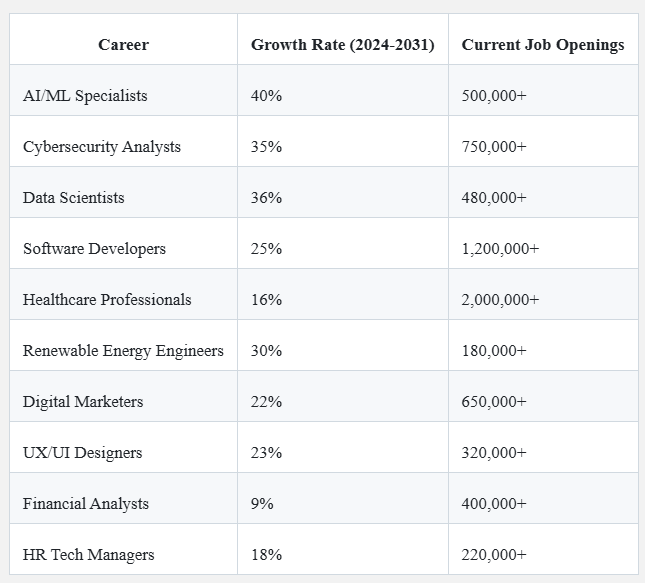
- Expected job growth of 35% through 2031
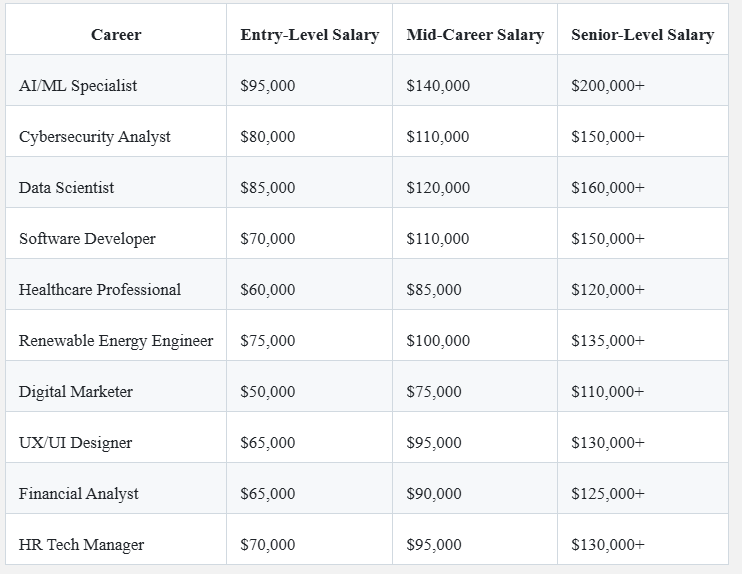
- Starting salaries around $80,000, with experienced professionals earning $150,000+
- High demand across all industries
- Opportunities for freelance and consulting work
What They Do
Cybersecurity Analysts protect digital systems by monitoring for intrusions, analyzing threats, and responding quickly to any potential breaches. They design and implement security measures to keep information safe, from personal data to national security secrets.
Ethical Hackers perform authorized hacking tests to identify vulnerabilities. They think like cybercriminals but act ethically to help organizations strengthen their defenses. Their work often includes penetration testing, code review, and developing strategies to prevent future attacks.
Top Skills
- Network and system security
- Threat analysis and penetration testing
- Knowledge of firewalls, encryption, and VPNs
- Programming and scripting (Python, C++, Java)
- Security frameworks and compliance (ISO, NIST, GDPR)
- Problem-solving and critical thinking
Future Outlook
Cybersecurity is one of the fastest-growing industries in the world. With more businesses moving online and cybercrime becoming more advanced, experts predict that global cybersecurity jobs will grow by over 30 percent by 2030.
Ethical hackers and cybersecurity analysts are among the most in-demand professionals, offering not only high salaries but also long-term job stability. As digital threats continue to evolve, so does the need for people who can protect data, systems, and privacy across every industry.

3. Data Scientists & Data Analysts
Data is the new oil, as they say. Every click, purchase, search, and interaction generates data and organizations need professionals who can make sense of it all. Data scientists and analysts transform raw numbers into actionable insights that drive business decisions, optimize operations, and predict future trends.
This is one of those tech jobs that doesn’t always require a computer science degree. Many
successful data professionals come from backgrounds in mathematics, statistics, economics, or
even social sciences. What matters most is your ability to think critically, spot patterns, and communicate findings to non-technical stakeholders.
The scope of this career is incredibly broad. You could be analyzing customer behavior for an
e-commerce platform, predicting disease outbreaks for a public health organization, or optimizing
supply chains for a logistics company. The versatility makes data science one of the most in-demand careers in 2025 across virtually every sector.
Why this career path is booming:
- Companies make 5% to 6% higher profits with data-driven decisions
- Median salary hovers around $100,000 to $130,000
- High flexibility for remote work
- Opportunities to specialize in specific industries
What They Do:
Data professionals turn raw information into insights that help businesses make smarter decisions. Data Analysts interpret trends and create visual reports, while Data Scientists build predictive models and machine learning systems. Together, they help organizations understand customer behavior, market trends, and performance metrics.
Top Skills:
- SQL, Python, R
- Data visualization (Tableau, Power BI)
- Machine learning and statistics
- Data cleaning and modeling
- Business intelligence tools
Future Outlook:
The data industry is projected to grow by 35% by 2030, driven by companies that rely on analytics to stay competitive. Professionals who can extract value from data will continue to be essential in nearly every industry.

4. Software Developers (AI, Cloud, Web)
Software development has been a solid career choice for decades, but in 2025, it’s evolved into something even more dynamic. Today’s developers aren’t just writing code, they’re building AI-powered applications, creating cloud-based solutions, and developing progressive web apps that work seamlessly across devices.
The demand for software developers remains one of the highest among all in-demand careers in 2025. Why? Because literally every business needs software. From the local bakery requiring an online ordering system to multinational corporations requiring enterprise-level applications, the opportunities are endless.
What’s particularly exciting is the shift toward specialized development. AI developers create intelligent systems that learn and adapt. Cloud developers build scalable infrastructure that can handle millions of users. Full-stack web developers craft end-to-end solutions that power our digital experiences. You can choose your niche based on what excites you most.
Career advantages:
- Starting salaries around $70,000, senior developers earn $150,000+
- Freelancing and contract work is extremely common
- Ability to work from anywhere in the world
- Entrepreneurial opportunities to build your own products
What They Do:
Software developers design, build, and maintain applications that power the digital world. Some focus on web apps, others on cloud platforms, and some specialize in integrating AI features into existing systems. They translate ideas into code that delivers seamless digital experiences.
Top Skills:
- Programming (Python, Java, JavaScript, C++)
- Web frameworks (React, Node.js, Angular)
- Cloud platforms (AWS, Azure, Google Cloud)
- API integration and DevOps tools
- Problem-solving and debugging
Future Outlook:
Software development continues to be one of the most stable and rewarding tech careers. With cloud computing and AI integration expanding rapidly, skilled developers are needed across every industry.

5. Healthcare Professionals (Telemedicine, Nursing, Biotech)
Healthcare has always been essential, but the pandemic accelerated changes that are making it one of the most in-demand careers in 2025. Telemedicine exploded in popularity, biotechnology is making breakthrough discoveries, and there’s a critical shortage of nurses and specialized healthcare workers worldwide.
Telemedicine doctors and nurses provide care remotely through video consultations, monitoring devices, and AI-assisted diagnostics. This has opened healthcare access to rural communities and made treatment more convenient for everyone. Biotechnology professionals are at the forefront of developing new treatments, personalized medicine, and gene therapies that were science fiction just a decade ago.
Honestly, if you’re looking for career stability and the opportunity to make a real difference in people’s lives, healthcare is it. The aging global population means demand will only increase, and the integration of technology is making these roles more diverse and intellectually stimulating than ever before.
What you need to succeed:
- Relevant degree (nursing, medicine, biotechnology)
- Licensing and certifications specific to your specialty
- Familiarity with healthcare technology platforms
- Strong communication and empathy skills
What They Do:
Healthcare professionals combine medical knowledge with technology to improve patient care. Telemedicine specialists provide virtual consultations, biotech experts work on innovative treatments, and nurses deliver essential care in both hospitals and remote settings.
Top Skills:
- Clinical care and diagnostics
- Telehealth technology and digital records
- Patient communication and empathy
- Research and biotechnology tools
- Data privacy and healthcare compliance
Future Outlook:
The healthcare industry is expected to grow by 15–20% in the next few years. With aging populations and rising telehealth adoption, healthcare roles remain among the most secure and meaningful careers.

6. Renewable Energy Engineers
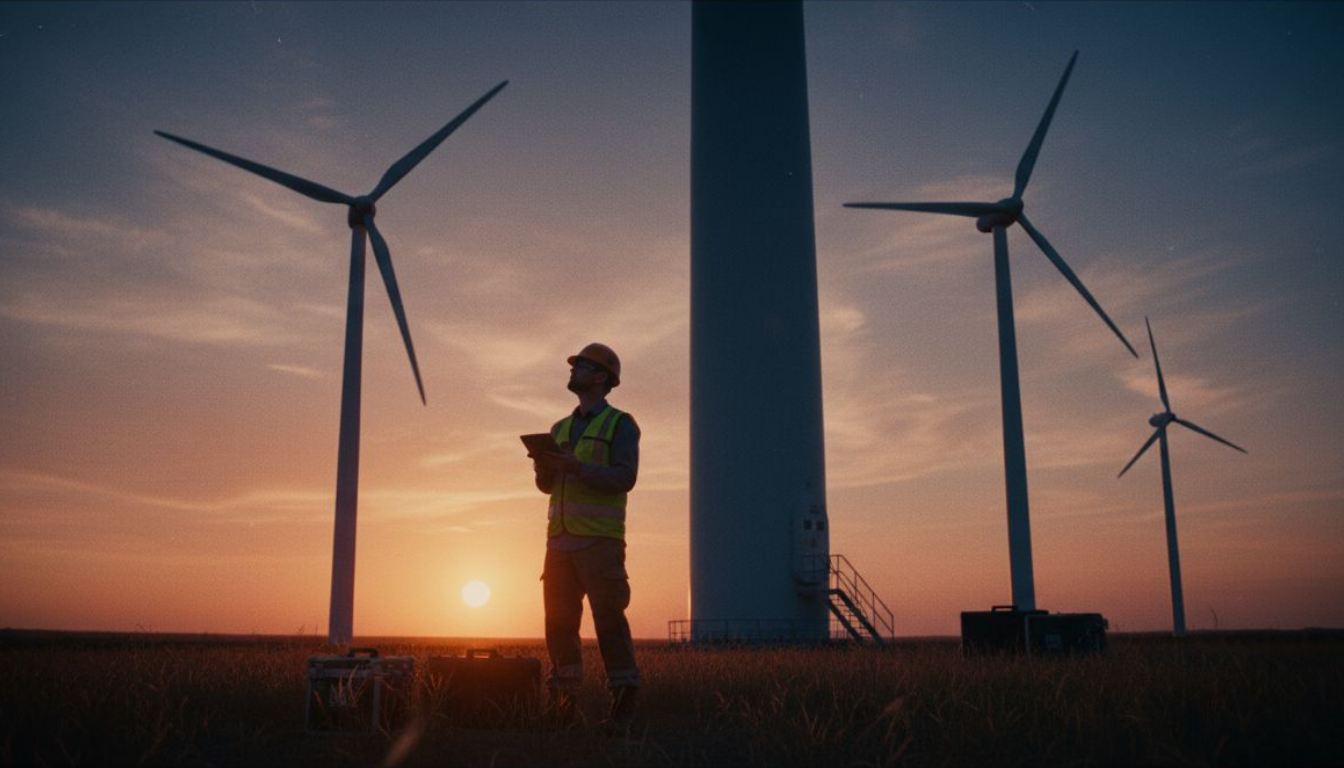
Climate change isn’t just an environmental issue—it’s an economic opportunity. The renewable energy sector is experiencing explosive growth as countries worldwide commit to carbon neutrality. Solar, wind, hydroelectric, and emerging technologies like green hydrogen need engineers to design, build, and optimize these systems.
Renewable energy engineers work on some of the most impactful projects of our time. You could be designing offshore wind farms, improving solar panel efficiency, or developing energy storage solutions that make renewable power more reliable. It’s one of those future jobs where your work directly contributes to solving global challenges.
This field combines engineering expertise with environmental consciousness, making it particularly attractive to professionals who want their career to have meaning beyond a paycheck. Plus, government incentives and corporate sustainability commitments are driving massive investment, making renewable energy one of the best careers for the future in terms of both growth and job security.
Why consider this path:
- Global renewable energy jobs expected to reach 38 million by 2030
- Salaries typically range from $75,000 to $135,000
- Opportunity to travel and work on international projects
- Government incentives and funding support the industry
What They Do:
Renewable energy engineers design systems that generate power from sustainable sources like solar, wind, and hydro energy. They develop clean energy projects, improve efficiency, and help reduce environmental impact. Their work supports the global shift toward a greener, low-carbon economy.
Top Skills:
- Solar, wind, and hydroelectric technologies
- Electrical and mechanical engineering
- Energy storage and grid integration
- Sustainability and environmental management
- CAD software and project design
Future Outlook:
As countries invest in clean energy, this field is projected to grow by 25% or more through 2030. Engineers skilled in renewable systems are key to achieving global sustainability goals.
7. Digital Marketing & E-Commerce Strategists
In 2025, every successful business big or small depends on having a strong digital presence. That’s why Digital Marketing and E-Commerce Strategists are some of the most in-demand professionals in the job market. They’re the people who make sure products are seen, clicks turn into customers, and online stores stay one step ahead of competition.
These specialists bridge creativity and analytics. They design campaigns that not only attract people but also drive measurable results. Their goal is to turn traffic into sales and build long-term customer loyalty through smart digital strategies.
What They Do
Digital Marketing Strategists focus on how to reach the right audience, at the right time, with the right message. They run ad campaigns, manage brand visibility, and make data-driven decisions to boost engagement and conversions.
E-Commerce Strategists, on the other hand, focus on building and optimizing online stores. They handle product listings, customer experience, pricing strategies, and backend analytics to ensure every visitor has a smooth shopping experience.
Together, they form the backbone of a company’s online growth strategy.
Key Responsibilities
- Develop and manage marketing campaigns across Google, Meta, TikTok, LinkedIn, and other
platforms - Analyze traffic data, sales performance, and conversion rates to improve results
- Oversee online store operations (Shopify, Amazon, WooCommerce, Magento)
- Manage search engine optimization (SEO) and paid advertising (PPC) strategies
- Create digital funnels that guide customers from awareness to purchase
- Plan seasonal promotions, discounts, and influencer partnerships
- Track performance metrics and use analytics to refine marketing efforts
Essential Skills
- Strong understanding of SEO, SEM, and social media algorithms
- Content strategy and copywriting
- Marketing automation tools (HubSpot, Mailchimp, Klaviyo)
- Google Analytics and data reporting
- Conversion Rate Optimization (CRO)
- Product pricing and online merchandising
- Customer relationship management (CRM) tools
Education & Career Path
Many digital marketers start with degrees in Marketing, Business, or Communications, but this field is equally open to self-taught professionals. Certifications from Google, HubSpot, or Meta can be powerful career boosters.
Future Outlook
As global online sales continue to climb, the demand for digital marketing and e-commerce experts will surge by 20–25% through 2030. With AI tools making data analysis faster and personalization smarter, strategists who can combine creativity, storytelling, and analytics will stand out the most.
In short, if you can sell online, understand digital trends, and connect with audiences through data and creativity this is one of the most future-proof careers you can choose.

8. UX/UI Designers & Product Developers
In today’s fast-paced digital world, the difference between a product that thrives and one that fails often comes down to design. That’s where UX/UI Designers and Product Developers come in. These professionals are the bridge between technology and human experience they make sure every website, app, or digital platform is both functional and enjoyable to use.
UX Designers (User Experience) focus on how users interact with a product their needs, frustrations, and overall journey. They research behavior, test prototypes, and improve usability to make the experience as smooth as possible.
UI Designers (User Interface) take care of what users see colors, buttons, typography, and layout. Their job is to make products visually appealing and consistent with the brand’s style.
Product Developers turn those designs into reality. They plan new features, test user feedback, and ensure every product works as beautifully as it looks. Together, these roles create the seamless digital experiences people expect from modern brands.
What They Do
UX/UI Designers and Product Developers collaborate to design and deliver digital products that feel intuitive and natural to use. They combine creativity, technology, and psychology to understand what users want and then build it. From mobile apps to e-commerce websites, their work influences how people interact with technology in daily life.
They conduct user research, design wireframes and prototypes, and work closely with developers to bring ideas to life. The ultimate goal is to ensure that every touchpoint from the first click to the final checkout feels effortless and satisfying.
Top Skills
- UX research and usability testing
- Wireframing and prototyping (Figma, Adobe XD, Sketch)
- Visual and interaction design principles
- Design thinking and user psychology
- Product strategy and feature prioritization
- Collaboration with developers and business teams
Future Outlook
As businesses compete to deliver better digital experiences, UX/UI and Product Design roles are growing fast. The field is projected to expand by 23% by 2030, driven by new technologies like AI, AR/VR, and personalized digital experiences.
Companies now see great design as a competitive advantage not a luxury. Professionals who can combine creative design with data-driven decision-making will have the edge in the years ahead.
Whether working for startups, tech giants, or freelancing independently, UX/UI Designers and Product Developers are shaping how the world interacts with technology.

9. Financial Analysts & Fintech Experts
Money drives every economy, and in 2025, technology drives how that money moves. Financial Analysts and Fintech Experts are at the heart of this transformation. They combine financial knowledge with digital innovation to make banking, investing, and payments smarter and more efficient.
Financial Analysts study markets, assess risks, and help organizations make better financial decisions. They turn complex data into clear insights that guide investments and budgeting. Their work helps businesses stay profitable and financially secure in a fast-changing economy.
Fintech Experts, short for financial technology professionals, bring technology into finance. They create and manage digital tools such as mobile banking apps, online payment systems, and blockchain platforms. Their goal is to make financial services faster, safer, and accessible to everyone.
Together, these professionals are reshaping how people and businesses manage money in the digital age.
What They Do
Financial Analysts interpret financial data, predict market trends, and provide insights that help companies make smart investment decisions. They work in banks, investment firms, insurance companies, and corporate finance departments.
Fintech Experts design and improve the digital systems that power modern finance. They develop secure mobile payment solutions, digital wallets, and AI-driven tools that simplify transactions and automate financial processes. From cryptocurrency platforms to online lending services, they are changing how the world handles money.
Top Skills
- Financial modeling and forecasting
- Data analytics and Excel expertise
- Knowledge of blockchain, cryptocurrency, and digital banking
- Market research and risk management
- Programming skills in Python or SQL for automation
- Understanding of financial regulations and compliance
Future Outlook
Finance is evolving rapidly as technology becomes central to every financial transaction. Companies need professionals who understand both money and innovation. The Fintech sector is expected to grow by more than 20 percent each year through 2030, while financial analysts will continue to be vital across industries.
This career path offers strong job security, high earning potential, and opportunities to shape the future of digital finance. Those who can combine analytical thinking with technical skill will lead the next generation of financial innovation.

10. Remote Work Specialists & HR Tech Managers
Work has changed forever. In 2025, remote and hybrid jobs are no longer the exception they’re the norm. Remote Work Specialists and HR Tech Managers help companies adapt to this new reality by building systems that keep employees connected, productive, and supported, no matter where they are.
Remote Work Specialists focus on the logistics and strategy of distributed teams. They design workflows, communication systems, and digital tools that help teams work efficiently across time zones. Their role ensures that remote employees stay engaged, motivated, and aligned with company goals.
HR Tech Managers, on the other hand, manage the technology that powers human resources. They oversee tools for recruiting, performance tracking, employee engagement, and training. From AI-driven hiring platforms to virtual collaboration apps, they make sure technology supports every stage of the employee experience.
Together, they form the backbone of the modern workplace where flexibility, productivity, and technology come together.
What They Do
Remote Work Specialists help organizations transition smoothly to remote or hybrid setups. They implement policies, digital platforms, and communication tools like Slack, Zoom, or Microsoft Teams to keep work running smoothly. They also train managers and employees to maintain productivity and work-life balance outside the traditional office.
HR Tech Managers oversee HR software systems that manage payroll, recruitment, onboarding, and employee performance. They evaluate and integrate new technologies that improve efficiency and employee satisfaction. Their job is to make HR smarter, faster, and more data-driven.
Top Skills
- Remote collaboration and workflow design
- Digital communication and leadership
- Knowledge of HR software (Workday, BambooHR, SAP SuccessFactors)
- Data analysis and employee performance tracking
- Change management and organizational development
- Strong communication and problem-solving skills
Future Outlook
The global shift toward remote and flexible work is here to stay. Companies across industries are investing heavily in HR technology and remote work infrastructure. The demand for specialists who can manage digital work environments and employee technology systems is growing fast.
By 2030, remote collaboration roles and HR tech management are expected to grow by over 18 percent worldwide. These professionals will play a vital role in shaping the future of work one that values flexibility, inclusivity, and innovation.

How to Prepare for In-Demand Careers in 2025
Now that you know which careers are booming, how do you actually prepare? Here are actionable steps:
A. Learn In-Demand Skills Take online courses on platforms like Coursera, Udemy, LinkedIn Learning, or freeCodeCamp. Focus on high-growth areas like coding, data analysis, digital marketing, or UX design.
B. Build a Portfolio Showcase your work. Create projects, contribute to open-source code, design mock websites, or run practice marketing campaigns. Real examples beat theory every time.
C. Network Strategically Connect with professionals on LinkedIn, attend industry events (virtual or in-person), and join online communities in your field. Networking opens doors you didn’t even know existed.
D. Stay Curious Job trends 2025 will keep evolving. Read industry news, listen to podcasts, follow thought leaders, and never stop learning. The most successful people are perpetual students.
E. Consider Certifications Certifications in cybersecurity (CompTIA Security+), cloud computing (AWS Certified Solutions Architect), data science (Google Data Analytics), or digital marketing (HubSpot, Google Ads) can boost your credibility fast.
The in demand careers in 2025 favor those who are proactive, adaptable, and willing to invest in themselves.
Frequently Asked Questions (FAQ)
What careers will be most in demand in 2025?
The most in-demand careers in 2025 include AI and Machine Learning Specialists, Cybersecurity Analysts, Data Scientists, Software Developers, Healthcare Professionals, Renewable Energy Engineers, Digital Marketers, UX/UI Designers, Financial Analysts, and Remote Work Specialists. These roles are driven by technology, sustainability, and digital transformation.
What are the best high-paying jobs of the future?
High-paying future jobs include AI specialists ($120,000-$180,000), Cybersecurity Analysts ($95,000-$150,000), Data Scientists ($100,000-$160,000), and Software Developers ($90,000-$140,000). These tech jobs offer strong salaries, excellent benefits, and opportunities for career growth.
How can I prepare for emerging careers?
To prepare for emerging careers, focus on learning in-demand skills like coding, data analysis, and digital marketing. Build a portfolio showcasing your work, earn relevant certifications, network with industry professionals, and stay updated on job trends 2025. Adaptability and continuous learning are essential.
Which skills will matter most in 2025?
The most important skills in 2025 include technical abilities like Python, AI, cybersecurity, and data analysis, combined with soft skills like adaptability, critical thinking, communication, and creativity. The best careers for the future require blending human intelligence with digital tools.
Final Thoughts: Your Future Starts Now
The in-demand careers in 2025 aren’t just about chasing trends they’re about aligning your passions with opportunities that solve real problems. Whether you’re drawn to tech jobs, healthcare, renewable energy, or creative fields like UX design, the future of work is bursting with possibilities.
Now here’s the thing: you don’t need to have everything figured out today. Start small. Pick one skill. Take one course. Make one connection. The most successful people aren’t those who wait for the perfect moment they’re the ones who take action now.
The world needs AI specialists to build smarter systems. Cybersecurity analysts to protect our data. Healthcare professionals to care for aging populations. Renewable energy engineers to save the planet. Digital marketers to connect brands with customers. And so many more.
Which of these in-demand careers in 2025 resonates with you? What problems do you want to solve? What skills are you excited to learn?
Inspiration for Bold Ideas
Stay informed with valuable insights into the most in-demand careers in 2025. Discover how innovation, adaptability, and persistence can help you thrive in high-growth fields and guide you toward a successful and rewarding career.
Discover more inspiring stories, practical insights, and motivational content on the Careerizo Blog or follow our Facebook page for regular updates.